Masonry material takeoff
Free Concrete Block Calculator
This free concrete block calculator sizes a wall the way the yard prices it. Enter the wall, pick the block, subtract the openings, and get blocks, mortar bags, sand and pallets in one pass.
Reviewed September 1, 2026 by Sam Johnson from the Concrete Calculators Editorial Team. Published formulas and editable planning assumptions are identified below.
Blocks to order
blocks, waste included
- Net wall area
- 257 sq ft
- Blocks per course
- 30
- Courses high
- 12
- Blocks before waste
- 290
- Mortar (80 lb bags)
- 10
- Mortar sand
- 0.30 cu yd
- Pallets
- 4
At 4 pallets, have the yard deliver. A boom truck can set pallets along the wall line and save you a day of moving block by hand.
Take this estimate with you
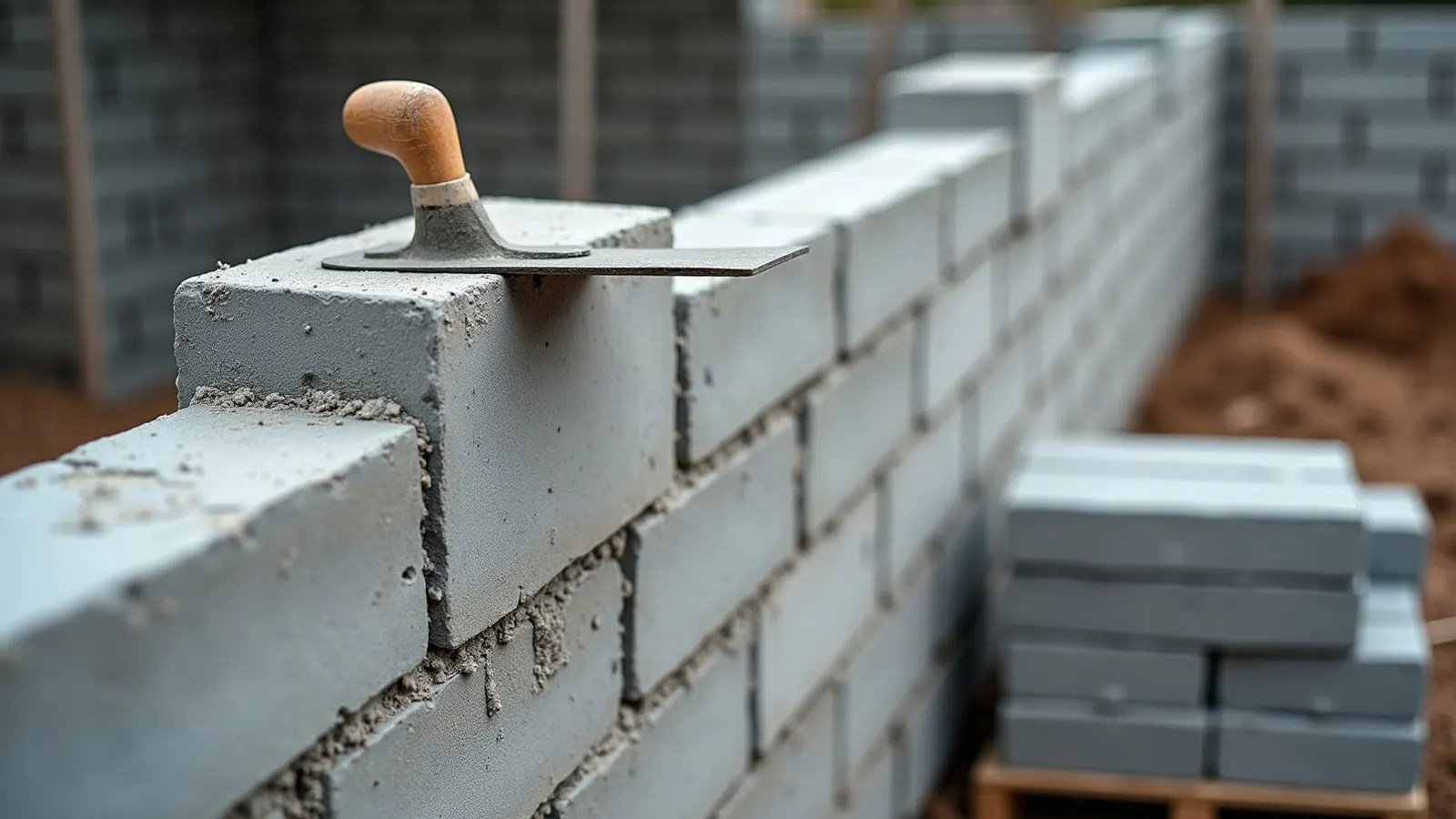
How the concrete block calculator counts blocks
A standard block has a nominal face of 8 by 16 inches, mortar joint included. That face covers 128 square inches, and a square foot is 144, so every square foot of wall takes 144 divided by 128, which is 1.125 blocks. The calculator multiplies wall length by height, subtracts each opening, multiplies the net area by blocks per square foot for your block size, adds waste, and rounds up to a whole block.
A worked block count example
Worked example: a 40 by 8 ft garage wall is 320 sq ft. A 9 by 7 ft door opening removes 63, leaving 257. At 1.125 blocks per square foot that is 289.1 blocks. Add 5 percent waste and you order 304. Mortar runs one 80 lb bag per 33 blocks, so 10 bags. Sand runs one cubic yard per 1,000 blocks, so 0.3 yards. At 90 blocks per pallet the order ships on 4 pallets.
Sizing the footing under the wall
Every block wall sits on a concrete footing. Until the footing calculator ships, size that pour with the concrete calculator using the trench option. If you are pouring a slab inside the walls, price it with the concrete pad cost calculator.
Concrete block sizes and what they are for
Actual sizes run 3/8 inch under nominal to leave room for the mortar joint. Weights are for normal weight units and vary by plant, so treat them as close, not exact.
| Nominal size | Actual size | Weight, about | Common use |
|---|---|---|---|
| 4 x 8 x 16 in | 3.625 x 7.625 x 15.625 in | 27 lb | Veneer and partition walls |
| 6 x 8 x 16 in | 5.625 x 7.625 x 15.625 in | 32 lb | Interior bearing walls |
| 8 x 8 x 16 in | 7.625 x 7.625 x 15.625 in | 38 lb | The standard structural block |
| 10 x 8 x 16 in | 9.625 x 7.625 x 15.625 in | 46 lb | Wider bearing walls |
| 12 x 8 x 16 in | 11.625 x 7.625 x 15.625 in | 55 lb | Foundations and retaining walls |
| 8 x 8 x 8 in half | 7.625 x 7.625 x 7.625 in | 20 lb | Ends of running bond courses |
Why block width does not change the count
The width changes weight, price and grout volume, not the count. Every 8 by 16 face lays up at 1.125 blocks per square foot, which is the factor the concrete block calculator uses for all of them.
Things that change the block count
- Corners. Keeping running bond around a corner takes a full and a half block on alternating courses, so plan a few extra blocks per corner.
- Bond beam courses use knockout or lintel units. They replace standard blocks one for one but are ordered as a separate line.
- Openings still cost cuts. The calculator subtracts the full opening, and the jambs and lintel bearing on each side come out of the waste allowance. Keep waste at 5 percent or better on a wall with several openings.
- Grout is not included in the concrete block calculator. Filling every core of an 8 inch wall takes roughly 0.8 to 0.9 cubic yards per 100 square feet. Confirm the figure with your supplier before you order the grout.
- Wall ties, horizontal joint reinforcement, rebar and lintels are not included. Neither is the water for the mortar mixer, which the laborer will remind you about.
Straight answers
Concrete block calculator questions
Open a question for the practical answer, including the assumptions behind the number.
Is a cinder block the same as a concrete block?
For counting, yes. Cinder block is the old name from when the aggregate was coal cinders. Modern units are concrete masonry units, and the nominal sizes and blocks per square foot are identical, so this concrete block calculator covers both.
What does CMU stand for?
Concrete masonry unit. It is the trade term for a concrete block. The workhorse size is the nominal 8 x 8 x 16, which is what most suppliers mean when you just say block.
How many concrete blocks per square foot of wall?
1.125 blocks per square foot for any block with the standard 8 by 16 inch nominal face. The number comes from 144 square inches per square foot divided by the 128 square inch face.
Do I subtract door and window openings?
Yes, and the calculator subtracts the full opening area. The cuts at jambs and above lintels come out of the waste allowance, which is why the default stays at 5 percent instead of zero.
How much mortar does one block take?
One 80 lb bag of mortar lays about 33 standard blocks with 3/8 inch joints. That is the industry rule of thumb and matches the coverage printed on most mortar bags. Budget a cubic yard of masonry sand per 1,000 blocks alongside it.
How many blocks come on a pallet?
The concrete block calculator uses 90, which is the common pallet count for standard 8 inch block. Lighter 4 and 6 inch units often stack more per pallet, so check the yard ticket before you plan the crane time.
How many blocks will one yard of concrete fill?
Roughly 110 to 120 standard 8 inch blocks, since filling every core takes about 0.8 to 0.9 cubic yards per 100 square feet of wall. Grout volume is not part of the block count above, so confirm the fill rate with your supplier before ordering.
Concrete tool library
Related free concrete calculators
Pick the scope that matches your pour. Every available calculator is free to use.
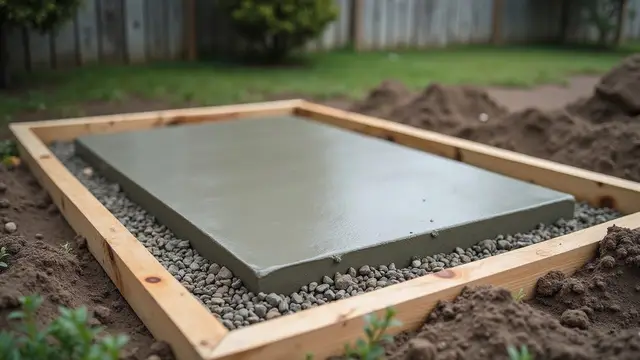
Free Concrete Pad Cost Calculator
Materials and labor price for a simple outdoor pad.
Open calculator →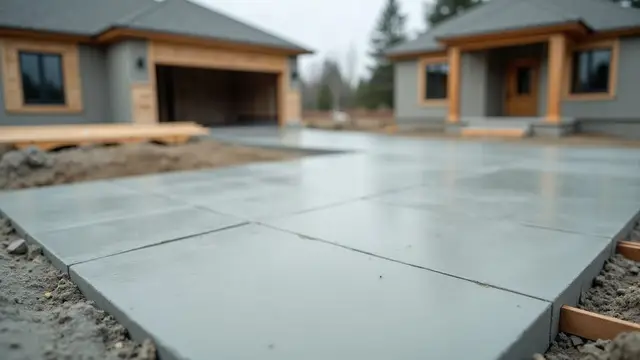
Free Concrete Slab Cost Calculator
Slab pricing with finish, thickened edges and vapor barrier.
Open calculator →
Free Concrete Floor Cost Calculator
Interior floor pricing with polish, stain and topping modes.
Open calculator →Concrete guides to read next
- Concrete vs cement
Cement is the powder, concrete is the material. Which bag to buy and why it matters.
- How much does a yard of concrete weigh
About 4,050 lb, or 2 tons, per cubic yard. What that means for trailers, forms and floors.
What changed on this page
- Per field unit choice added to wall and opening dimensions.
- Copy, email and print estimate actions added.
- Opening rows now flag empty or negative entries instead of using defaults.
Prices and formulas are reviewed on the schedule described in our methodology.