Concrete guide
How long does concrete take to dry?
Walk on it at 24 hours, drive on it at 7 days, full strength at 28. What moves those numbers.
Reviewed September 1, 2026 by Sam Johnson from the Concrete Calculators Editorial Team. Sources and planning assumptions are linked in the article.
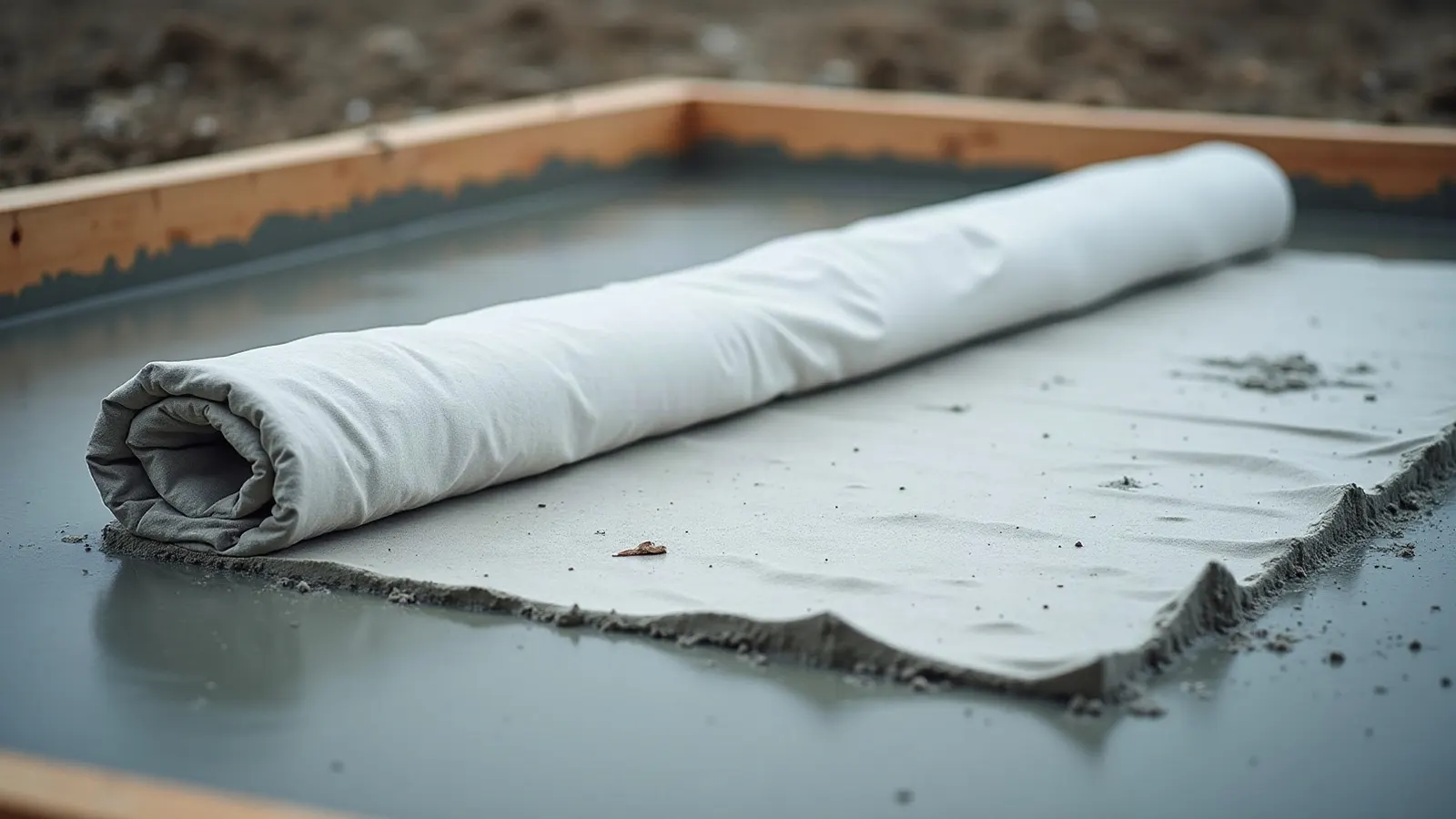
Concrete is walkable in about 24 hours, ready for vehicles in 7 days, and at its specified strength in 28 days. Those three numbers cover most of what people mean when they ask how long concrete takes to dry.
The complication is in the word dry. Concrete does not dry out like paint. It hardens through a chemical reaction between cement and water called hydration, which is why a slab keeps gaining strength for years and why you keep it wet, not dry, in the days after a pour.
Before any of that matters you need the right amount of concrete on site, which the concrete calculator works out from your dimensions, and a realistic budget, which the concrete slab cost calculator puts together with base, reinforcement and labor.
How long concrete takes to dry, stage by stage
How long does concrete take to dry at each stage? The table below assumes a standard 3,500 to 4,000 psi mix, a 4 inch slab and mild weather around 70 F.
| Stage | Typical time | What is happening |
|---|---|---|
| Initial set | 4 to 8 hours | Surface firms up, finishing window closes |
| Foot traffic | 24 to 48 hours | Hard enough to walk on carefully |
| Remove forms | 24 to 48 hours | Edges can hold their own shape |
| Furniture, light loads | 3 days | Roughly half of design strength |
| Vehicles, driveways | 7 days | About 70 percent of design strength |
| Specified strength | 28 days | The number on the mix ticket |
Why 28 days is the concrete strength benchmark
Twenty eight days is not the day concrete stops hardening. It is the age at which test cylinders are broken to confirm the mix delivered what was ordered, and it became the industry standard because most of the practical strength gain has happened by then. A slab at one year is stronger than the same slab at 28 days.
Drying time versus curing time
These get used interchangeably and they are not the same thing, which matters because the fix for each is opposite.
| Curing | Drying | |
|---|---|---|
| What it is | The chemical reaction that builds strength | Water leaving the slab |
| What you want | Keep moisture in for at least 7 days | Moisture out, before flooring goes down |
| Timeline | Strength benchmark at 28 days | 30 days per inch of slab, as a rule of thumb |
| How to help it | Cover, damp cure, use a curing compound | Ventilate, dehumidify, heat |
The practical consequence: for the first week you are fighting to keep water in. Only later, and only if you are installing flooring, do you care about getting water out.
When flooring is going on top
A 4 inch slab needs roughly 120 days to release enough moisture for many flooring adhesives, using the common rule of 30 days per inch. Nobody should trust a calendar for this. Flooring manufacturers require a calcium chloride test or an in situ relative humidity probe, and installing over a slab that fails those tests is how expensive floors end up cupped and lifting.
What changes how long concrete takes to dry
- Temperature. Every 10 F above 70 roughly doubles the reaction speed. Below 50 F it slows sharply, and below 40 F it can effectively stop until the slab warms.
- Mix strength. A 4,000 psi mix reaches walkable hardness sooner than 2,500 psi because it carries more cement.
- Water content. A wet, soupy mix takes longer to set and cures weaker. This is the single most common way a correct order becomes a bad slab.
- Thickness. A 6 inch slab holds heat and moisture longer than a 4 inch slab, so it sets slower and cures better.
- Admixtures. Accelerators buy back cold weather time, retarders protect a hot weather pour. Both are ordered at the plant, not added on site.
- Humidity and wind. Wind steals surface moisture faster than heat does. A breezy 65 F day can be harder on a slab than a still 85 F one.
Curing is what decides strength, not drying
Curing means keeping the slab moist while it hydrates, and it is the cheapest quality you can buy on a pour. Concrete cured properly for seven days can end up substantially stronger than the same mix left to dry out, which is why the effort belongs at the start rather than in repairs later.
Three methods, all acceptable:
- Water curing. Keep the surface wet with sprinklers, soaker hoses or wet burlap. Most effective, most labor.
- Cover curing. Plastic sheeting or curing blankets trap the moisture already there. Watch for discoloration where plastic touches unevenly.
- Curing compound. A sprayed membrane that seals moisture in. Easiest on large pours, but check it is compatible with any coating or flooring you plan later.
Cold and hot weather drying times
Below 50 F, how long concrete takes to dry roughly doubles at every stage in the table, and protect the slab from freezing for at least the first 24 hours. Concrete that freezes before it reaches about 500 psi can lose a large share of its final strength permanently, and no amount of warm weather afterwards recovers it.
Above 85 F, work in the opposite direction: pour early, keep the mix cool, have the crew and tools ready before the truck arrives, and start curing the moment finishing is done rather than at the end of the day.
What to do while the concrete dries
Keep it damp for seven days, keep vehicles off for seven days, and keep deicing salt off through the first winter. Cut or tool the control joints within the first day, before the slab decides where to crack on its own. The concrete slab cost calculator shows the joint spacing for your dimensions, and the concrete pad cost calculator does the same for a shed or equipment base.
If you are still planning rather than pouring, the concrete driveway thickness guide covers how thick to go, and the concrete price per yard guide covers what the truck will cost.
Straight answers
Concrete drying time questions
Open a question for the practical answer, including the assumptions behind the number.
How long does concrete take to dry before you can walk on it?
About 24 to 48 hours for foot traffic on a normal 4 inch slab in mild weather. The surface is hard enough to walk on long before the slab is strong, so keep tools, ladders and pets off it until day seven.
How long does concrete take to dry completely?
Concrete never dries the way paint does. It keeps gaining strength for years, reaching about 70 percent at 7 days and its specified strength at 28 days. If you are asking because flooring goes down on top, that is a moisture question and needs a calcium chloride or relative humidity test, not a calendar.
Does concrete dry faster in hot weather?
It sets faster, which is not the same as better. Above about 77 F the mix stiffens quickly, you lose finishing time, and the surface can dry before the slab below has hydrated, which causes crazing and dusting. Hot weather pours need earlier starts, cool water and immediate curing.
Can concrete dry in the rain?
Concrete cures under water, so rain is not automatically a disaster. Rain landing on a fresh, unfinished surface is the problem: it raises the water content of the top layer and leaves a weak, dusty finish. Cover the pour if rain arrives before the surface has set.
How long before concrete gets wet?
A few hours after finishing is enough for light moisture, and keeping it damp after that actually helps. The window to protect is the finishing period, roughly the first 4 to 8 hours, when added water still mixes into the surface.
Concrete tool library
Related concrete calculators
Use the calculator that matches the scope of your next pour.
Free Concrete Calculator
Cubic yards, bags and cost for five common concrete shapes.
Open calculator →
Free Concrete Slab Cost Calculator
Slab pricing with finish, thickened edges and vapor barrier.
Open calculator →
Free Concrete Pad Cost Calculator
Materials and labor price for a simple outdoor pad.
Open calculator →