Concrete guide
Vapor barrier under a concrete slab
When it is required, what mil to use, and why the sand layer argument was settled.
Reviewed September 1, 2026 by Sam Johnson from the Concrete Calculators Editorial Team. Sources and planning assumptions are linked in the article.
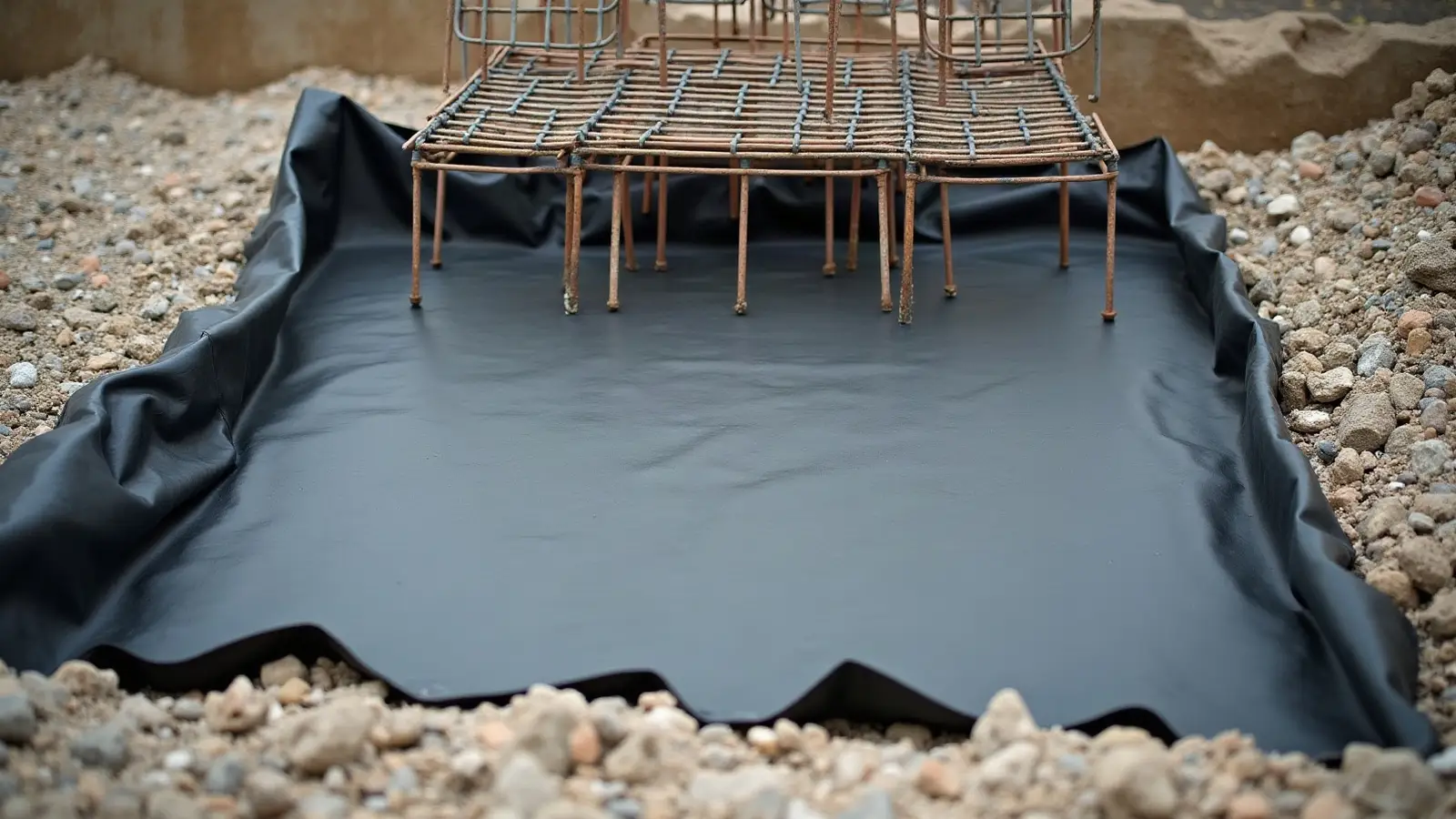
A vapor barrier under a concrete slab is a plastic sheet that stops ground moisture from moving up through the concrete. It costs about $0.50 per square foot installed and it is the difference between a floor that stays sound and one that fails under its own finish.
The rule is simple: if the slab will be enclosed or conditioned, it gets a barrier. A patio, a sidewalk or a detached shed floor does not.
Price it with the pour using the concrete slab cost calculator, which has a barrier option, or the concrete floor cost calculator for interior work where it is not optional.
Why a vapor barrier under a concrete slab matters
Concrete looks solid and is not. It holds a network of capillaries left behind by mix water, and ground moisture wicks up through them continuously, day and night, for the life of the slab. A bare slab on damp ground can pass several pounds of water vapor per 1,000 square feet every day.
Outdoors nobody notices. Indoors that moisture arrives underneath whatever you installed on top, and the results are predictable: adhesives release, wood flooring cups, vinyl bubbles, coatings blister and peel, and carpet grows mold. None of those repairs cost less than the sheet would have.
Slabs that need a barrier under them
| Slab | Barrier | Why |
|---|---|---|
| House or addition floor | Required | Conditioned space, flooring on top |
| Garage floor | Recommended | Coatings and stored goods |
| Basement floor | Required | Highest moisture exposure |
| Workshop or finished shed | Recommended | Any coating or stored material |
| Patio, walkway, driveway | Not needed | Open to weather, no finish to protect |
| Detached bare shed slab | Optional | Depends what gets stored on it |
What thickness of barrier to use
Thickness is measured in mils, where one mil is a thousandth of an inch.
| Material | Typical use | Verdict |
|---|---|---|
| 6 mil poly | Sold as general construction film | Too easily punctured during the pour |
| 10 mil | Residential slabs | The practical minimum |
| 15 mil | Slabs receiving flooring | Common upgrade, small cost |
| 20 mil and above | Commercial, high moisture sites | Specified by the designer |
The failure mode is not the plastic wearing out. It is a boot, a rebar chair or a wheelbarrow wheel tearing a hole during placement, which is exactly what thin film does not survive. Paying for 15 mil instead of 6 mil on a 400 square foot slab is a difference of well under a hundred dollars.
Sand over the barrier: the argument settled
Older practice put a couple of inches of sand between the sheet and the slab, on the theory that it helped the slab cure evenly from both faces and reduced curling.
The problem is what happens to that sand. It sits below the slab and above the plastic, so any water in it, whether from the mix, from rain during construction or from a leak, has nowhere to drain. It stays there and feeds moisture into the slab for months, which is the opposite of what the sheet was installed to do.
Current guidance for slabs that will receive flooring is to place the concrete directly on the sheet. Crews who prefer the sand layer are not being careless; they are working from what used to be standard. If flooring is going down, the direct placement wins.
Installing a vapor barrier under a slab
- Finish the base first. Compacted crushed stone, graded flat. The sheet does not fix a bad base.
- Roll the sheet out over the whole area, running it up the perimeter forms so it reaches the top of the slab edge.
- Lap seams 6 inches minimum and tape them with a purpose made seam tape, not duct tape.
- Seal the penetrations. Every pipe, drain and conduit gets taped or booted. An unsealed penetration undoes the sheet around it.
- Walk it and repair before the truck arrives. Once concrete is coming down the chute, the barrier is finished being fixable.
- Place concrete directly on it. Use chairs to hold reinforcement up, not bricks or stones that can pierce the sheet.
What the barrier costs per square foot
At our default of $0.50 per square foot installed for 10 mil poly, the sheet is a rounding error next to the pour.
| Slab size | Area | Sheet cost | Share of a typical slab |
|---|---|---|---|
| 10x10 ft | 100 sq ft | $50 | About 6 percent |
| 20x20 ft | 400 sq ft | $200 | About 6 percent |
| 24x30 ft | 720 sq ft | $360 | About 6 percent |
| 30x40 ft | 1,200 sq ft | $600 | About 6 percent |
Compare that to the retrofit. Once the slab is down, adding moisture protection means an epoxy mitigation system, a sheet membrane or a floating floor assembly, and those run several dollars per square foot before anyone replaces the flooring that failed.
Vapor barrier under a concrete slab: the bottom line
Under a slab that will be enclosed, use 10 mil at minimum, 15 mil if flooring is planned, lap and tape the seams, seal the penetrations and pour straight onto it. Outdoors, skip it. The concrete slab cost calculator prices it alongside the concrete, base and reinforcement, and the concrete floor cost calculator does the same for interior floors where the finish depends on getting this layer right.
Curing matters just as much once the concrete is down, and the concrete drying time guide covers how long to keep vehicles and flooring off the new slab.
Straight answers
Vapor barrier questions
Open a question for the practical answer, including the assumptions behind the number.
Do you need a vapor barrier under a concrete slab?
Under anything enclosed or conditioned, yes. Ground moisture moves up through concrete continuously, and it will cloud sealers, delaminate coatings and ruin flooring installed later. An open patio, sidewalk or detached shed slab does not need one.
What thickness vapor barrier goes under a slab?
10 mil is the practical minimum for residential work and 15 mil is common where flooring is planned. The 6 mil sheeting sold as construction film tears too easily during the pour to be reliable, which is why the referenced standard sets a floor on performance rather than price.
Should sand go on top of the vapor barrier?
Not under most residential slabs. A sand layer above the barrier was traditional, meant to help the slab cure evenly, but it traps water that then has nowhere to go and slows drying for months. Current practice is to place concrete directly on the barrier for slabs that will receive flooring.
How much does a vapor barrier add to a slab?
About $0.50 per square foot installed for 10 mil poly, which is $200 on a 20x20 ft slab. That is one of the cheapest lines on the whole job and by far the cheapest moisture insurance available.
Can you add a vapor barrier to an existing slab?
Not underneath it. The retrofit options all go on top: an epoxy moisture mitigation coating, a sheet membrane, or a floating floor with its own underlayment. All of them cost multiples of what the sheet would have cost during the pour.
Concrete tool library
Related concrete calculators
Use the calculator that matches the scope of your next pour.
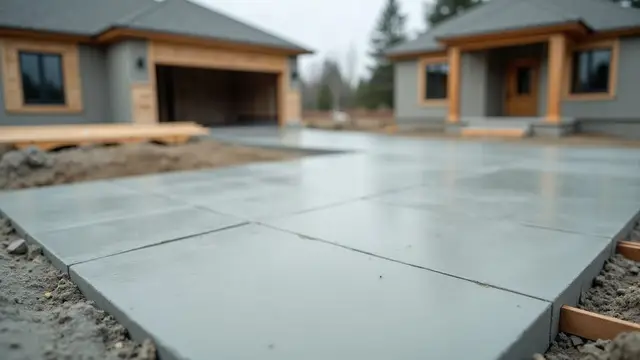
Free Concrete Slab Cost Calculator
Slab pricing with finish, thickened edges and vapor barrier.
Open calculator →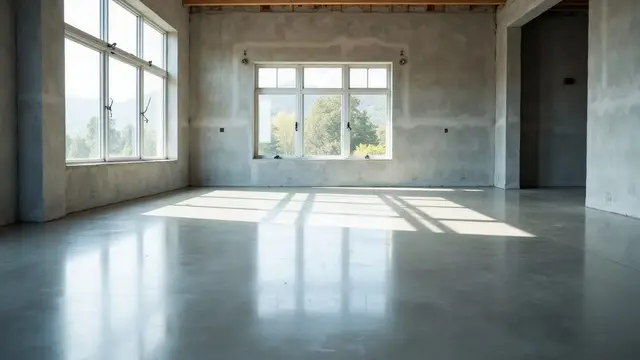
Free Concrete Floor Cost Calculator
Interior floor pricing with polish, stain and topping modes.
Open calculator →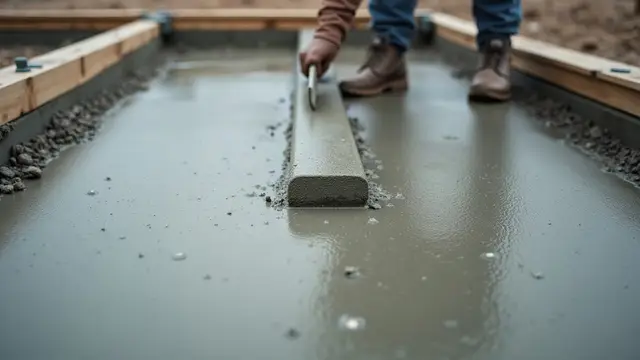
Free Concrete Calculator
Cubic yards, bags and cost for five common concrete shapes.
Open calculator →